Proposals
We have been exploring how best to develop this site, to bring about the most efficient operation within the current constraints of the surrounding area
The proposals
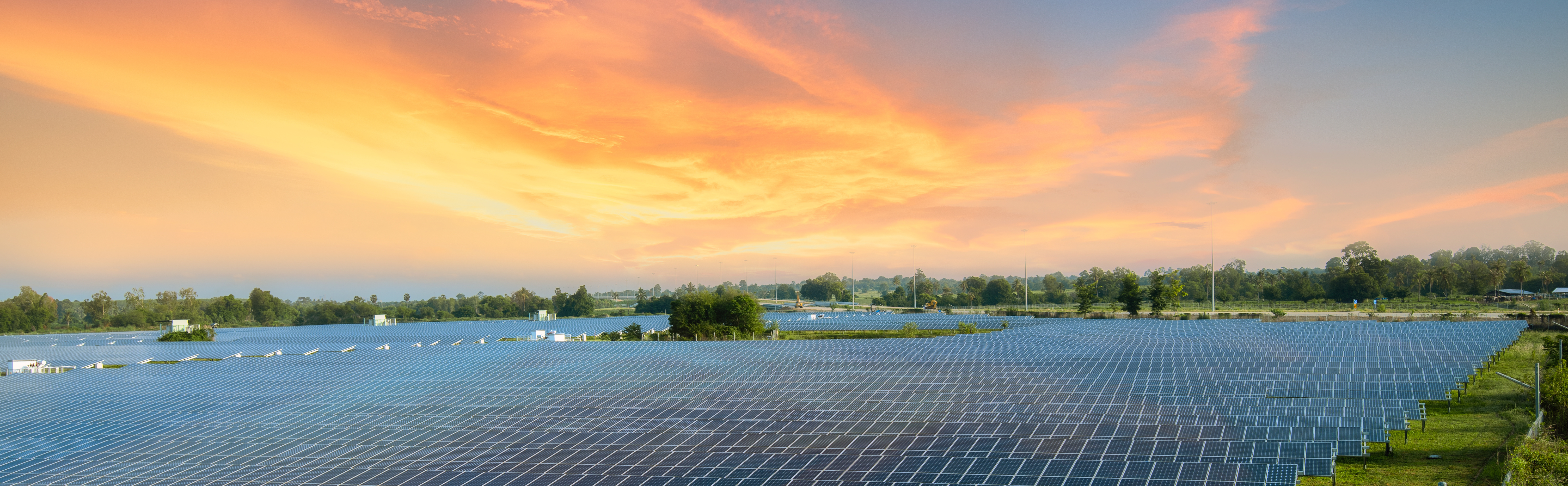
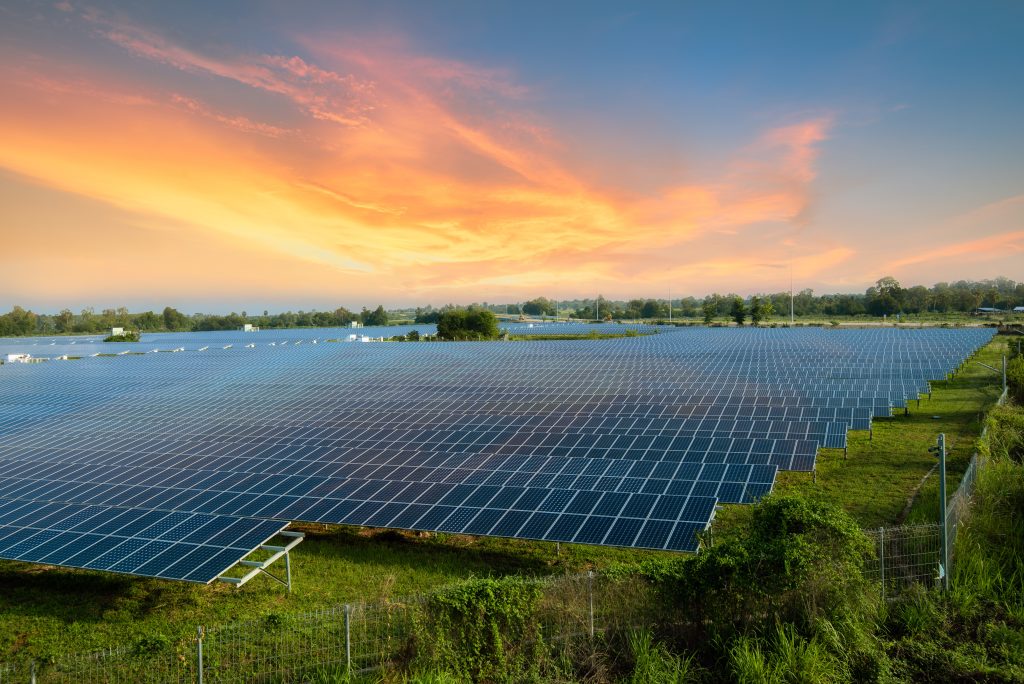
The plans for St Asaph Solar Farm include –
- Solar panels capable of generating approximately 18.44MW of sustainable electricity.
- Ancillary on-site equipment, such as inverters, transformers, substations and associated cabling.
- Temporary infrastructure enabling works, construction compounds and lay down areas, alongside on-site access tracks, entrances and exits.
- Underground cabling linking the two parcels of land together, and on to the St Asaph substation.
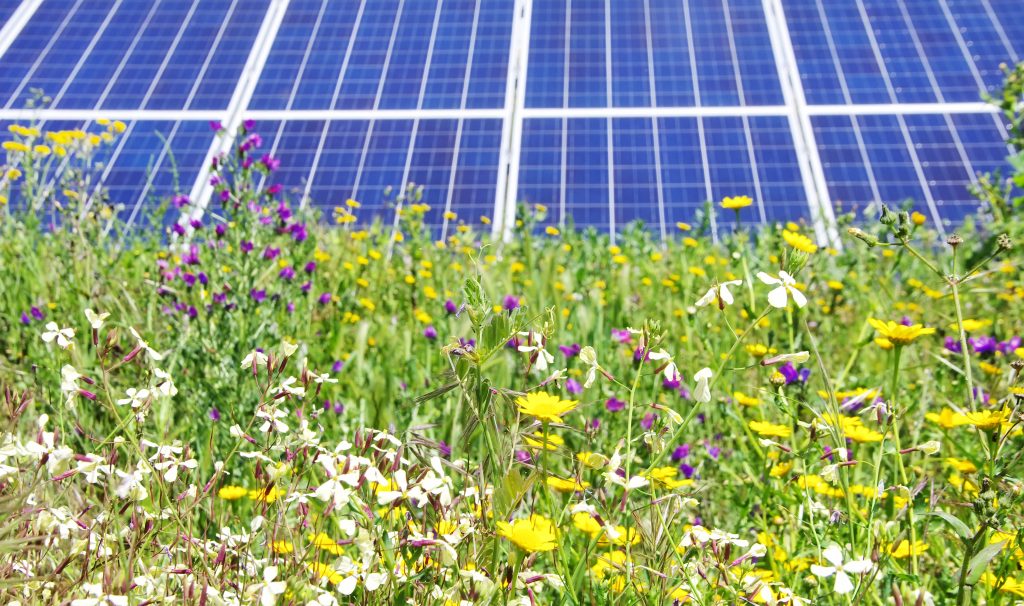
- A range of measures, including the retention of existing hedgerows and vegetation where possible, as well as additional tree, hedgerow, and wildflower planting, and introduction of wide ecological corridors to deliver a net benefit to biodiversity.
- Investment and job creation locally, including a dedicated community benefit fund to support local groups, projects, or charitable initiatives, permanent and temporary jobs created during construction and generation of business rates.
The solar farm will require no concrete foundations apart from the substation base, ensuring that the land can be easily returned to its previous use.

Proposed Changes
The key changes to the plans for St Asaph Solar Farm include:
- Removal of panels in a northwest field adjacent to the DNO substation (equivalent to approximately 10% of the overall site area);
- rationalisation of the remaining panel and site layout;
- updating of solar technology utilised within the Proposed Development; and
- associated updates to the proposed landscaping and other technical points.
These changes are considered both necessary and beneficial. They respond to any perceived overlap with the Mona Offshore Wind Project, which received a Development Consent Order (DCO) after the St Asaph application was originally submitted.
The revised scheme reduces – rather than expands – the internal site layout area within the overall red line boundary and removes development activity from a more environmentally sensitive part of the site. Importantly, the proposed amendments do not introduce any new or materially different environmental effects.
No changes are proposed to the red line boundary, ensuring consistency with the original Pre-Application Consultation (PAC) materials, DNS forms, and wider project information.
The updated documents are available to view on the consultation and documents page.
More secure and affordable energy
Renewable energy produced by solar panels is an important, and growing, component of Wales’ energy mix. The development of clean energy at home will enable the shift away from fossil fuels, which at the moment means Welsh consumers are exposed to volatile energy price changes in the international markets. This move will, in time, lower energy bills for consumers and stop us being reliant on fossil fuels from often autocratic foreign powers, such as Russia.
Solar power generated domestically reduces the need to import electricity from abroad, simultaneously creating energy industry jobs in the UK and making our energy supply more secure.
Biodiversity net benefit
Solar farms have been evidenced to produce a biodiversity net benefit through ecological improvements, such as planting which encourages diverse species habitation. We are committed to ensuring that the project will deliver biodiversity and habitat improvements including a net overall gain in biodiversity.
The climate crisis is closely linked with the nature crisis, also known as the ecological emergency. Climate change, industrialisation, and intensive farming are threatening nature, wildlife, and biodiversity. The Natural History Museum reports that the UK has some of the lowest biodiversity in Europe, with only 50.3% remaining.
FAQ
These FAQs provide some information about the proposals.
If you have any additional questions not covered below, please feel free to contact the project team via this website
Doesn’t using fields for ground-mounted solar farms instead of putting solar panels on rooftops hurt the UK’s food security?
We recognise that there are concerns about the deployment of solar panels in fields affecting the UK’s food security. Should development consent be granted, it is possible that sheep grazing could happen on part of the site once the solar farm is constructed and operational.
Solar farms play an important role in supporting the continued food supply in Wales, primarily through addressing climate change which is the single biggest threat to food security.
The third UK Climate Risk Assessment for Wales, published in 2021, describes climate change as the primary factor affecting food production patterns.[1] The UK Government Food Security Report also found that biggest medium to long term risk to the UK’s domestic food production comes from climate change and other environmental pressures. The report even quantifies this risk and found that climate change could reduce the proportion of BMV agricultural land from a baseline of 38.1% to 11.4% by 2050, reducing the UK’s prime agricultural land supply by almost three quarters.
Solar farms also occupy a very small proportion of Welsh land and even if projects are built with five times as much capacity as those which have submitted a planning application, they would still only occupy 0.17% of Wales’s total land area.
[1] Solar Energy Wales, Ground mounted solar farms and agricultural land: The Facts, December 2022. Accessed via: https://solarenergyuk.org/wp-content/uploads/2022/12/Wales-Briefing_2022.pdf
How tall will the panels on the ground-mounted frames be and what will they look like?
The metal frames will be anchored into the ground and solar panels mounted on them at a tilt angle of 15°. The maximum height of the panels will be 3 metres above ground level. The panels will face due south and will be dark blue or black in appearance. The bottom of the panels will be a minimum of 90cm above the ground and they will be positioned in rows with approximately 4.5 metres of space from front to back, to ensure the land between them can be managed as either meadowland or for agricultural purposes.
How big will the substation be?
There will be a DNO substation building built on concrete foundations, located in the north at the entrance to the site. The substation building will measure a maximum height of 4m and will be enclosed by 2.0m high palisade fencing.
The design incorporates additional enclosures for metering and switchgear and there will be Switch/Transformer substations positioned throughout the site.
Why has this site been chosen?
The availability of a suitable grid connection is the primary reason for developing a solar farm in this location.
The site is also located in an area of low flood risk, is not subject to any specific ecological or environmental designations, and has a suitable topography (landscape) to accommodate solar panels. All of which make it a suitable location to host a solar farm.
Isn’t the site high quality agricultural land (Best and Most Versatile)?
According to the Welsh Government’s Predictive Agricultural Land Classification (ALC) all of the land within the Site is predicated to be Grade 3b, which is not Best and Most Versatile (BMV). All of our on-site surveys to date have confirmed this, and we are continuing to carry out such surveys to confirm this is the case for the entirety of the site, by the time we submit our planning application.
Will the site be noisy?
Will the site be noisy?
The solar farm itself will not generate significant noise during operation, as solar panels are quiet and require minimal maintenance. Some noise may be heard from the initial construction works. This will be temporary and managed in order to minimise disruption or nuisance for nearby residents, and enforced as a condition of any planning permission.
Will there be lots of construction traffic?
As part of our application, we have carefully assessed the routes for delivering the solar panels through a comprehensive Traffic Management Plan, designed to minimise any disruption to the local area. We will work closely with the local highways authorities and technical consultees to ensure that the most suitable and efficient transport routes are selected. The Traffic Management Plan is available for public review and feedback during the Pre-Application Consultation (PAC).
How will you access the site?
Construction traffic will access the site by: following the A525 south off the A55; following the A525 south until the roundabout with the B5381; and following the B5381 southwest to Cefn Meiriadog. A Transport Statement and Construction Traffic Management Plan will accompany the planning application. These demonstrate that the construction traffic associated with the proposals can be safely accommodated within the existing highways network.
How can local communities and interested parties influence the development of the proposals?
We are undertaking a pre-application community consultation exercise prior to submitting an application to Planning and Environment Decisions Wales (PEDW). This centres around a formal consultation period as required by the DNS regulations set out in the Planning (Wales) Act 2015. This formal consultation period will last six weeks and will include further detailed information about the proposals.
All information about the consultation is available to view on the project website and publicised via a number of channels.
For further information about the consultation process and how to provide your feedback, the Planning Inspectorate Wales has produced a useful guide for local communities about the DNS process, which can be found here: https://gov.wales/sites/default/files/publications/2019-11/developments-of-national-significance-dns-procedural-guidance.pdf
When will the application be submitted and what happens afterwards, will I still be able to make further comments?
We are currently aiming to submit an application to Planning and Environment Decisions Wales (PEDW) in early July 2025 following the pre-application consultation with consultees and the local community.
Once we have submitted our application, PEDW will check that all the required documents have been submitted and decide whether or not to ‘accept’ the application. A Planning Inspector will then be appointed, and the examination will start.
The Inspectorate will arrange for the Local Planning Authority (in this case Denbighshire County Council and Conwy County Borough Council) to display a notice (or notices) on site. A case officer at PEDW will email or write to all owners and occupiers of adjoining land, Community Councils and other statutory bodies, inviting them to submit comments (known as ‘representations’). At this point, local communities will then have 5 weeks to submit comments to PEDW directly.
How will the proposed project support the local community, economy and involve the local supply chain?
The proposed St Asaph Solar Farm will deliver a multitude of economic benefits for local businesses and supply chains, as well as local residents and Denbighshire County Council.
Anesco is committed to employing locally and utilising the local supply chain during construction and operation wherever possible. As a company we are keen to utilise the pre-application and determination period to build up a network of local suppliers who would be interested in tendering during the procurement process.
The project will also support the wider Wales economy by using Welsh contractors during the pre-application and determination periods, helping to support Welsh jobs and Welsh businesses. Anesco has already demonstrated our commitment to bringing economic benefit to Wales through the appointment of Wales based consultants.
Will this mean the site now becomes brownfield?
We will apply for temporary planning permission for 40 years, ensuring that once the solar farm reaches the end of its operational lifespan, all panels, equipment, and ancillary works will be dismantled and removed.
Unlike housing developments, this approach retains the land for long-term agricultural use. After the decommissioning of the proposed St Asaph Solar Farm, the land will be returned to its current state, albeit with a much higher biodiversity yield, thereby maintaining its designation as agricultural land for future generations.
The development will not alter the planning status of the land by creating a ‘brownfield’ site; the land will remain greenfield throughout the lifespan of the solar farm. As such, the development would not pave the way for any other future developments.

You can get in touch through any of the following methods:
- Email: info@stasaph-solarfarm.co.uk
- Freephone: 0800 699 0081
- Post: FREEPOST TC CONSULTATION (no further address or stamp required)